Maisha Mazuri Partnership Program
MMP
Maisha Mazuri Partners –
Partners for a Better Future
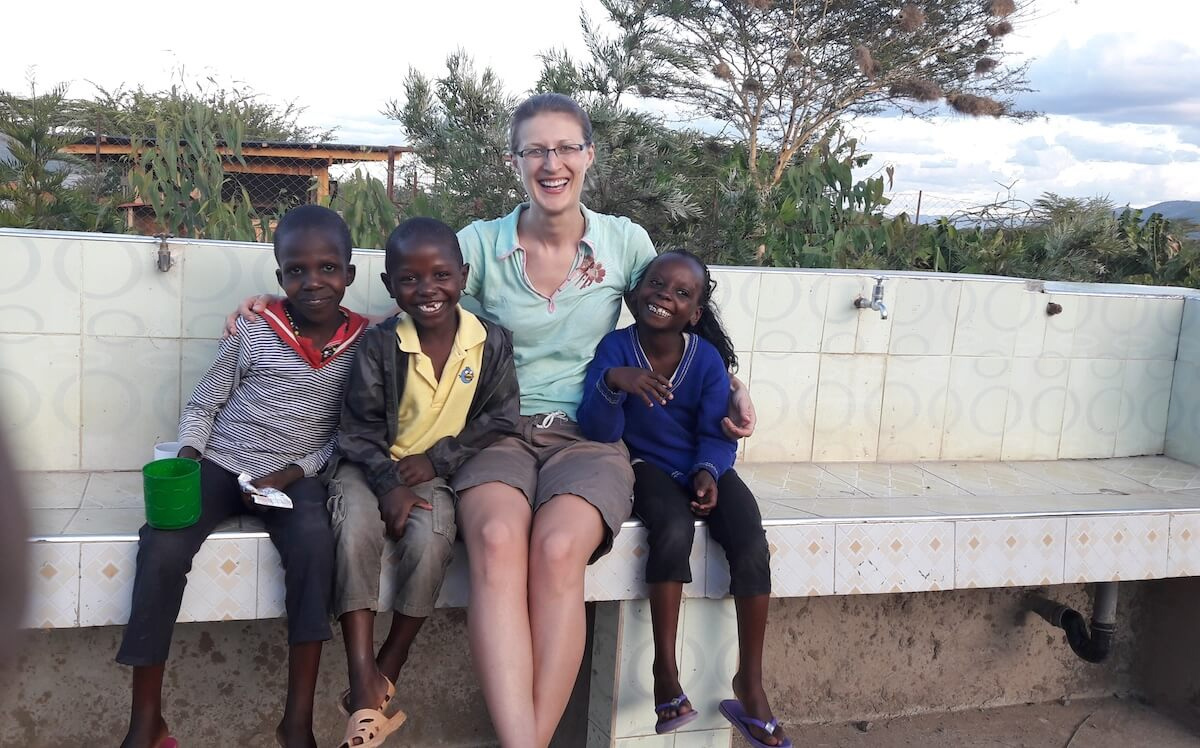
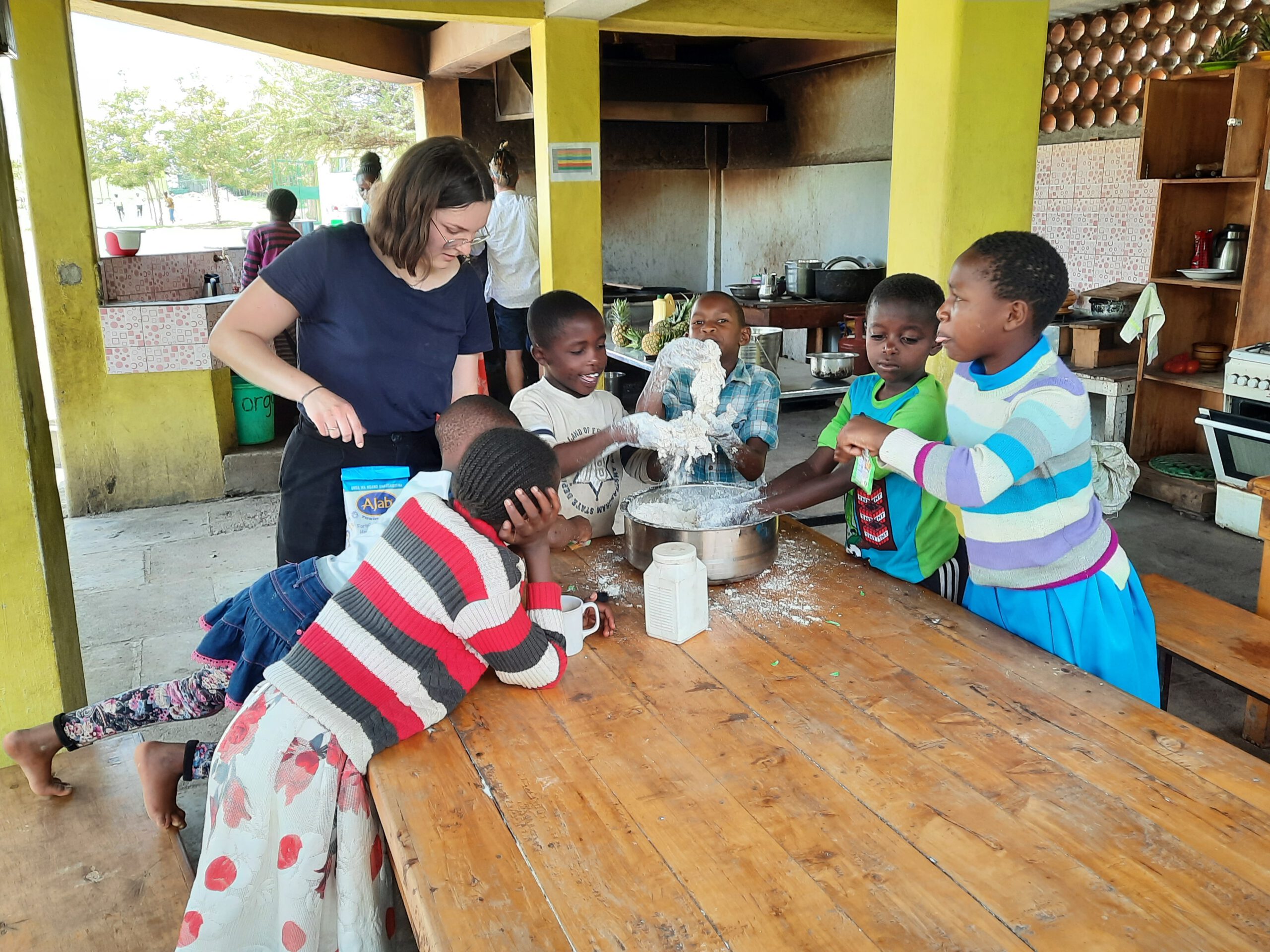
In addition to the children who live “center-based,” meaning at the Maisha Mazuri Children’s Center, there are 85 more children who live with their families or relatives. All 124 children together form the “pool” for our Maisha Mazuri Partnership Program: Our goal is to first meet all the needs of the children and youth, such as healthcare, schooling, food, accommodation, and counseling, while also enabling German donors to have a very personal connection with “their” children. That’s why we founded “Maisha Mazuri Partners (MMP) – Partners for a Better Life”!
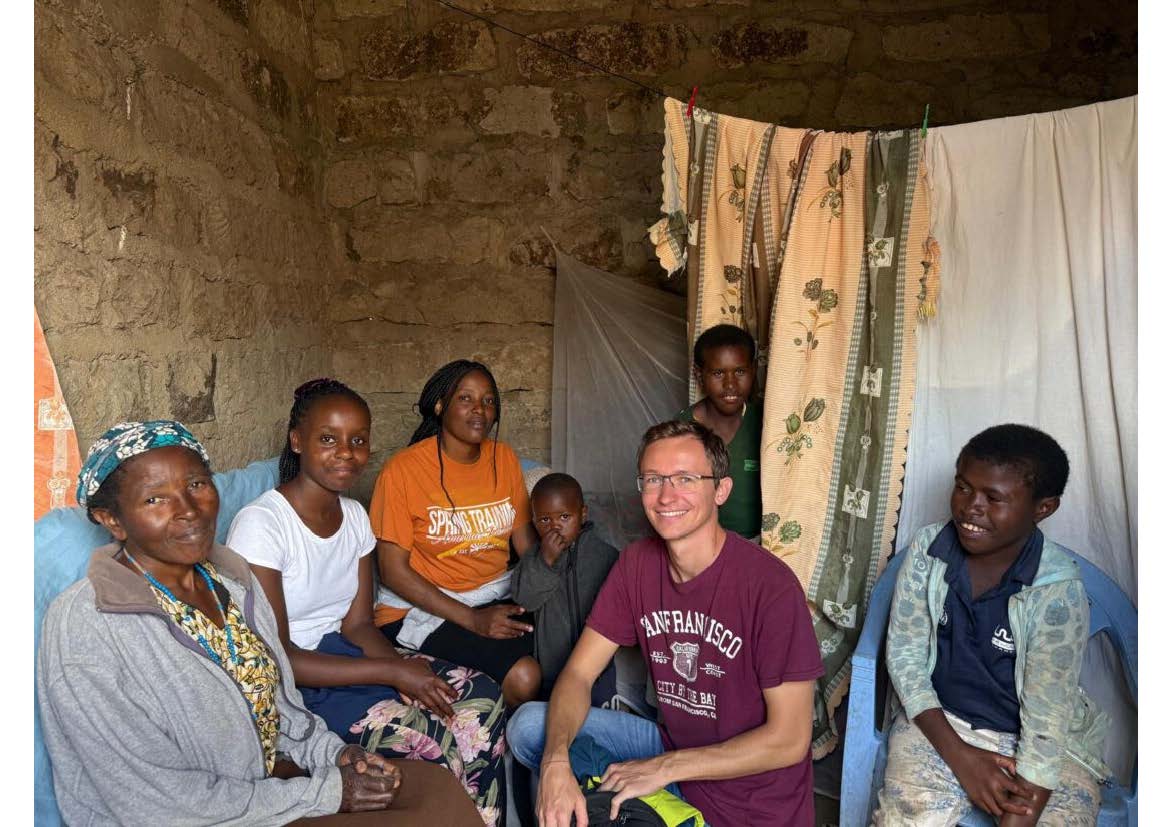
The MMP is a sponsorship project that specifically supports children in very precarious circumstances, along with their families, in addition to the children living at the center. The aim is to preserve the family unit and provide sustainable support to the entire family in managing their daily lives. For this, our team’s household strengthening program usually applies, while financial support goes towards the education of the sponsored children. The following FAQ provides a more detailed insight into the MMP, explaining what is important to us in this project and how your money is used. Let us convince you and become an MMP, a Maisha Mazuri Partner – a partner for a better life!
Q & A – Our FAQ
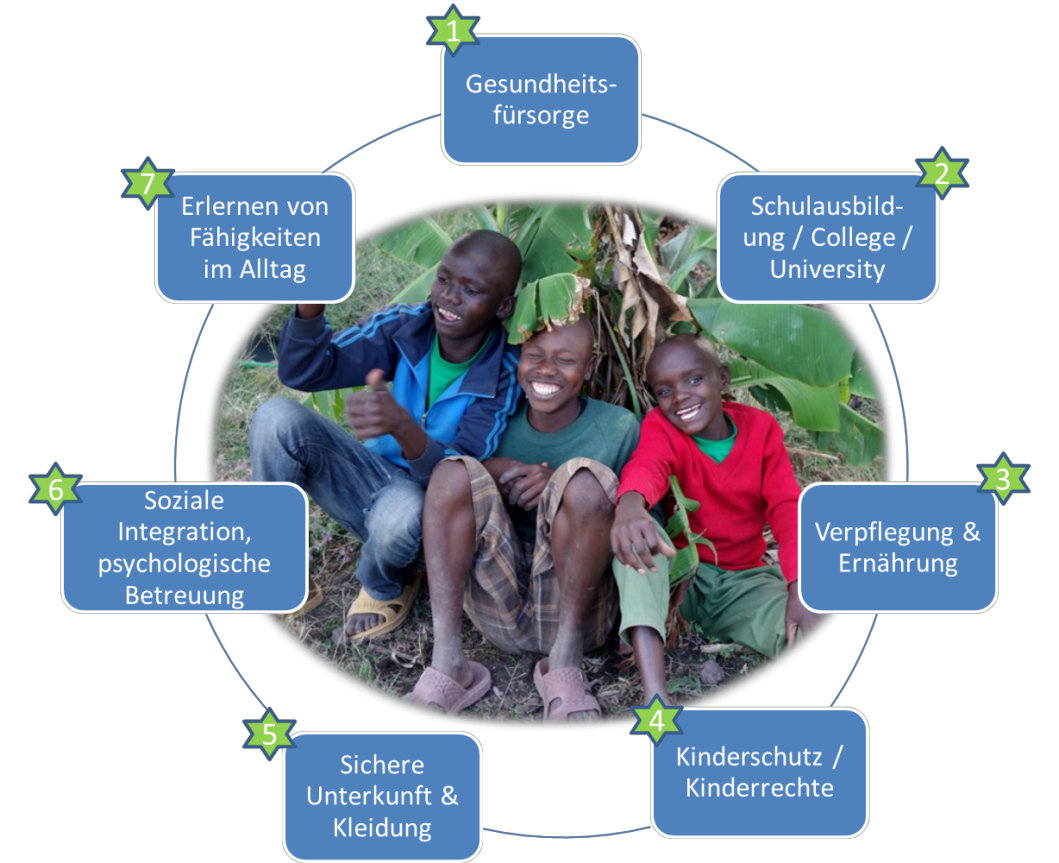
What are the most important needs of the children that the funds are intended to cover?
Which children are supported through sponsorship?
Where do the children come from and how are they "selected"?
Where do the children come from and how are they "selected"?
- Most of the children at the Maisha Mazuri Children’s Centre (MCC) come from the immediate vicinity of the MCC, but also from the slums of Nairobi. Jimmy Kilonzi and his organization Youth Support Kenya have been working in the slums of Nairobi and the MCC’s surrounding area, i.e., Machakos County, for many years. They have built a good network, collaborate with community officers/children’s welfare services and local women’s groups, and therefore know very well where children need support.
- During repeated home visits and a detailed interview with the children’s remaining relatives, a comprehensive intake protocol is created, providing information about the child’s full name, age, biological parents, siblings and other relatives, school status, religion, illnesses, or other important information.
Afterward, a decision is made whether the child will be admitted to the Sponsorship Program. It is also assessed whether a child should be removed from their environment and brought to the Maisha Mazuri Children’s Centre – or if the child is best placed to remain with their family.
How old are the children?
The children are generally between 5 and 22 years old, covering kindergarten to college/university. However, most attend primary school. Our and your support does not end with primary school, as this educational level is not sufficient for learning a profession.
Sponsors therefore continue to support their Kenyan sponsored children, especially through high school/university/vocational school, which would be unaffordable for our children without financial aid. However, a solid education, subsequent training, and the chance to support oneself and a family are only possible through high school.
Therefore, all years of education are a prerequisite for a successful path out of poverty, HIV, teenage pregnancy, crime, etc. For all these years, our sponsored children need a reliable sponsor who secures the seven needs for each child.
How do I become a partner?
Anyone can become a Maisha Mazuri Partner!
Partners can be individuals, families, companies, associations, or even schools/school classes.
Please contact our representative Helen Milkau (mmp@4kenya.info), who will provide you with all the information. Currently (October 2026), we are not facilitating new 1:1 partnerships, as consolidation is important to us. Since we also want to continue to guarantee that all children and families receive comprehensive care, we will not be admitting additional sponsored children into the program at the moment. Nevertheless, we are very grateful for new partners on the German side who help ensure that the current children and youth all have the chance to complete their education with our and your help. We would therefore be very pleased if you are willing to contribute to the entire Maisha Mazuri Partnership “pot.” Some children, due to illness or disability, need very special help and therefore require more from the partnership “pot” than others. Helen knows many of our children personally and will be happy to assist you with information and advice.
What does a partnership cost me? How is my money used?
With a monthly donation of 30 Euros or more, you support a sponsored child. This amount is primarily used for the seven needs of a sponsored child described above!
If one child needs a little less money in a month, but a playmate in the MMP needs a little more due to hospital costs, medication, or school fees, these differences can be balanced out. Perhaps it will be the other way around a month or a year later.
The money goes into an account used exclusively for the children’s needs. It serves as a kind of safety net for all children in the Maisha Mazuri Partnership Program. It equally addresses all seven needs of our children listed in the diagram at the appropriate time.
You can therefore be sure that 100% of your monthly contribution benefits the children in the partnership project!
This distribution and availability of funds is enormously important to ensure equal treatment for all children. We hope for your understanding here.
At the end of February each new calendar year, you will receive the donation receipt for the previous year. Donations are tax-deductible. For amounts up to 300 Euros, the bank transfer slip also serves as proof.
Can I communicate with my sponsored child?
Yes, absolutely! At the beginning of the partnership, your sponsored child will write you a letter introducing themselves. After that, you can and should make contact.
Generally, you will receive a personal letter from your sponsored child once or twice a year (usually in December and summer). Of course, you can also write letters yourself throughout the year, which we will gladly forward to the child as soon as a volunteer or someone from the association flies to Kenya. If the child is not yet able to write a letter themselves, one of our social workers will do so. It should be noted that written communication is not as common in Kenya as it might be here. Nevertheless, the children and their families are curious and want to know everything about you, and they are proud to receive mail from afar. So feel free to write about yourself, your family, your home, garden, friends, hobbies, favorite foods, and special things currently happening in your life. Send photos or drawings and give them an idea of what to share about themselves. Creativity is welcome here. They can write themselves or with the help of our volunteers or social workers. These letters are a main component of the MMP.
We strongly advise against sending packages by mail. Packages arrive at the main post office in Nairobi and are opened there. No one guarantees that everything will still be in the package when it is picked up by the recipient. Furthermore, customs estimates the value of the package, and the tax levied on packages is correspondingly high. This tax is usually so expensive that families cannot afford to pay it. So, if special items are needed for the child or their family, it is best to contact Helen. In Tala or Nairobi, there are (large) shopping centers where almost anything for daily life can be purchased. Our partners, perhaps even together with the children, would then procure these items!
How do I know that my money reaches my sponsored child?
- Annual reports from Youth Support Kenya and our association Hand in Hand für Kenia provide information on the use of sponsorship funds
- You communicate with the children through the personal letter you receive once a year. This way, you get feedback and always know if your money/extras have arrived.
- Of course, you also have the option to visit your sponsored child at the MCC.
- However, all other partnership supporters are always very welcome at the MCC; individual sponsorship is not required for this.
Monthly or one-time donations for all MMP children without direct contact with a child
If you prefer to make a monthly donation to all MMP children and are not interested in a direct partnership including correspondence, that is also possible. Your donation will then also go directly to the “MMP account,” but it can be used there for all children. If interested, please indicate this in the purpose of payment as follows: MMP – all children.
Withdrawing from the sponsorship program?
- Your partnership can be terminated by you at any time and without giving a reason. Please send a short email to our association (mmp@4kenya.info, Helen Milkau) so that we can look for a replacement for the child concerned in good time.
- Children can also leave the MMP. There are various reasons for this, such as: the sponsored child completes the regular MCC plan and can support themselves, or the parents/responsible relatives withdraw their consent to the project, move to a distant area, or the child passes away.
How does the Kenyan school system work?
- Children start kindergarten, a type of preschool, at the age of three. This is required to attend school later. It is usually housed in the primary school building. It is divided into Baby Class (3 years), Middle Class (4 years), and Final Class (5 years).
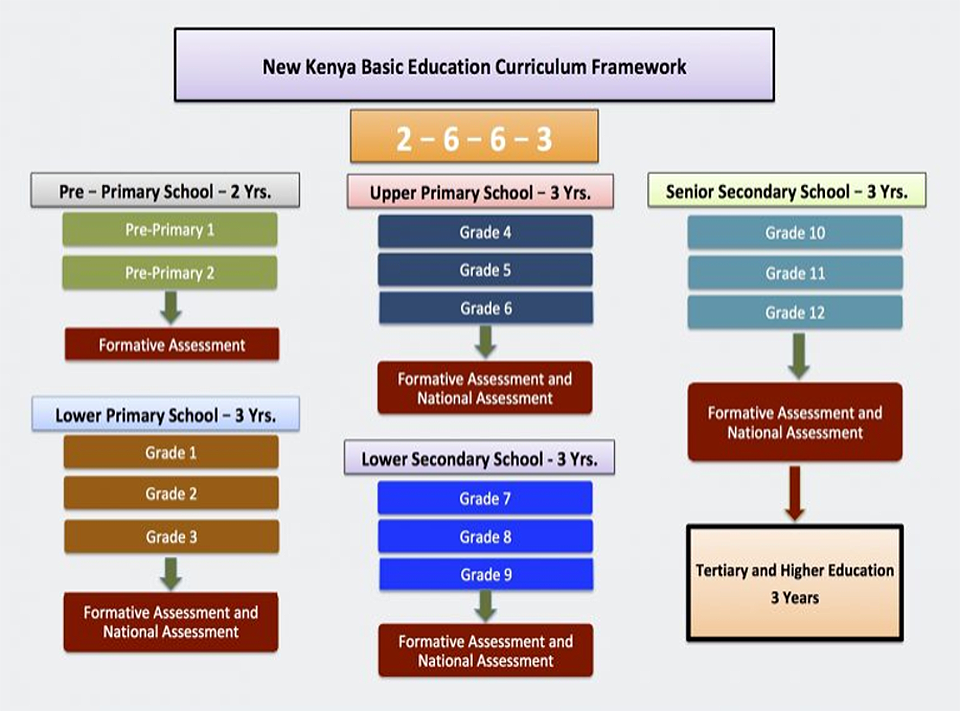
- In 1985, Kenya introduced the 8-4-4 school system, which is very similar to the British school system. From 2023, Kenya will change the system to 2-6-6-3.
- The school year is divided into three so-called “terms” and begins in January. Each “term” ends with an exam. Holidays are in April, August, and November/December.
- Primary school fees were abolished in Kenya in 2003. However, this does not mean that school is free for children. School uniforms, which are compulsory even in kindergarten, as well as school supplies (books, workbooks, pens, etc.), must be paid for by parents. In addition, many rural schools have poorly qualified teachers. So, if families want a better education for their children, they must send them to a distant boarding school. There, accommodation and provisions add to the regular costs.
- At the end of 6th grade, students take a nationwide standardized exam, the Kenyan Certificate of Primary Education (KCPE). A “good” certificate is a prerequisite for admission to a Secondary/High School.
- Secondary schools are fee-paying comprehensive schools. Here too, there are private and public schools. Due to high tuition fees, these are unaffordable for many Kenyan families, even though some students are supported by scholarships or sponsorship programs. High school concludes in 12th grade with a nationwide standardized exam, the Kenyan Certificate of Secondary Education (KCSE). Since January 2019, the secondary school (Academy of Maisha Mazuri) on the MCC premises has been operating under a dual system with applied vocational training. Here, our children now have another opportunity to complete their high school diploma.
- Admission to a university is only possible with a “good” secondary school diploma. Tuition fees vary from university to university. A secondary school diploma (KCSE) is also required for college or specialized vocational training.
Do you have further questions?
For further questions, simply send an email to mmp@4kenya.info.
Helen Milkau is responsible for the partnership program within the association and will be happy to assist you with all questions related to MMP.