

Ecological Sustainability
Solar Power
for light and water
Sustainability is not a luxury – it is a necessity in every region of this world. With the increasing scarcity of resources, an eco-friendly and thoughtful approach to water, energy, and waste can make all the difference. At the Maisha Mazuri Children Centre and the Maisha Mazuri Academy, we focus specifically on sustainable technology and a respectful approach to the environment. This is not just about ecological responsibility, but also about education: the children and young people learn here in a very practical way what they can contribute to protecting nature and resources.
Solar Power for Light and Water
In a region with many hours of sunshine, it makes sense to use the power of the sun. That is why we work with solar solutions as much as possible in the children’s center, the school, and the boarding house:
Solar Lamps, Solar-Powered Water Pump, and Water Filtration System
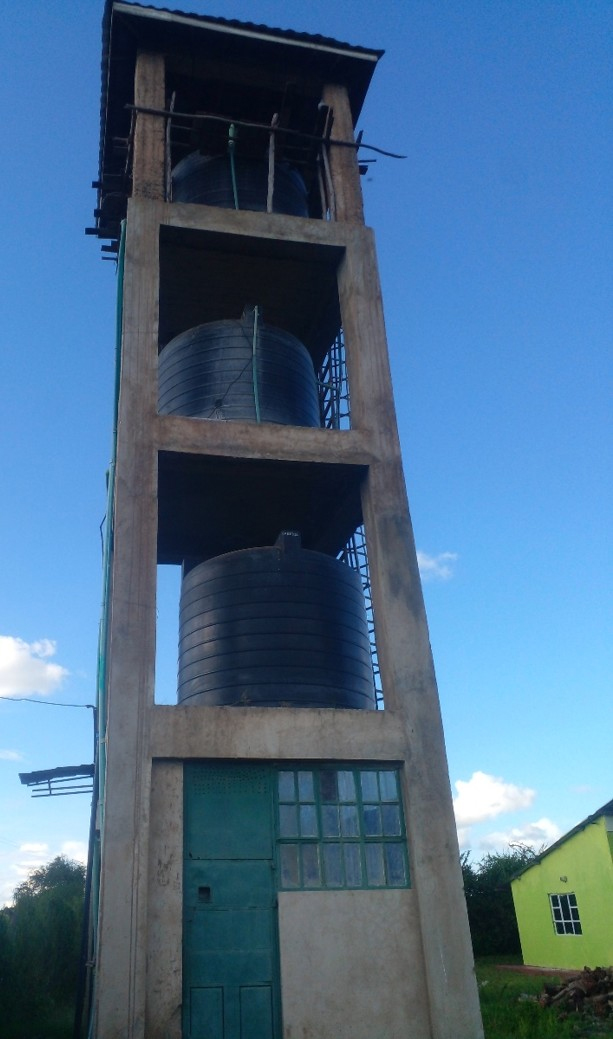
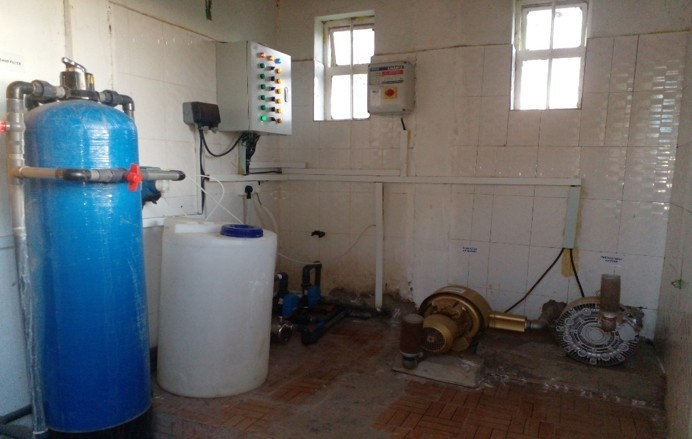
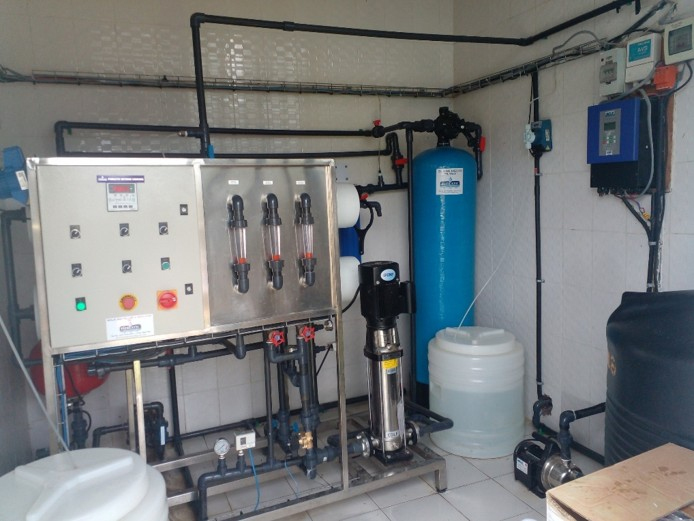
Since 2017, a deep well with a water pump has ensured a daily, reliable water supply for the children’s center, school, boarding house, and the surrounding community. For drinking purposes, the water, which has a high fluoride content, is also filtered (solar-powered). Everyone can fill their water bottles at special drinking water basins, meaning no plastic bottles need to be bought and people drink more at the same time because it simply tastes good.
The large solar system for all electricity needs in the three projects is currently still a dream that will hopefully be realized soon. This is for reasons of sustainability, but also for security of supply. Especially during the rainy months, power outages are the rule and often last for hours.
Complete Water Cycle
A true centerpiece of the sustainable concept since 2022 is the modern biodigester system. Here, all wastewater from the children’s center and the school/boarding house – from toilets, showers, sinks, and kitchens – is treated in an eco-friendly way. The water is cleaned in a biological treatment process and then reused:
- It flows back into the toilet flushing circuit – a closed water cycle that saves valuable fresh water.
- Excess water is used, for example, for washing cars or watering our green fence (a natural, thorny alternative to expensive walls and fences).
And sometimes it's the small steps:
- Waste separation, cleanliness, and order throughout the entire premises.
- Recycling used materials: A great example is old car tires, which get a second life as planters and beautify the grounds.
- Collecting rainwater in large water tanks to irrigate our agricultural areas or for cleaning and washing.